Have you ever watched a scuba diving video and thought, “I wish I could do that someday.”
The good news is—you can.
You don’t need to be a professional swimmer. You don’t need expensive equipment. And you don’t need years of training.
Millions of people get scuba certified every year, and most of them are complete beginners.
If you can follow simple instructions and feel comfortable in the water, you’re already off to a good start.
In this guide, I’ll explain the whole process in simple English. By the end, you’ll know exactly how to become a certified scuba diver in 2026.
What Does “Scuba Certified” Mean?
A scuba certification is like a driving license—but for diving.
Scuba certification proves you can dive safely using proper training and skills.
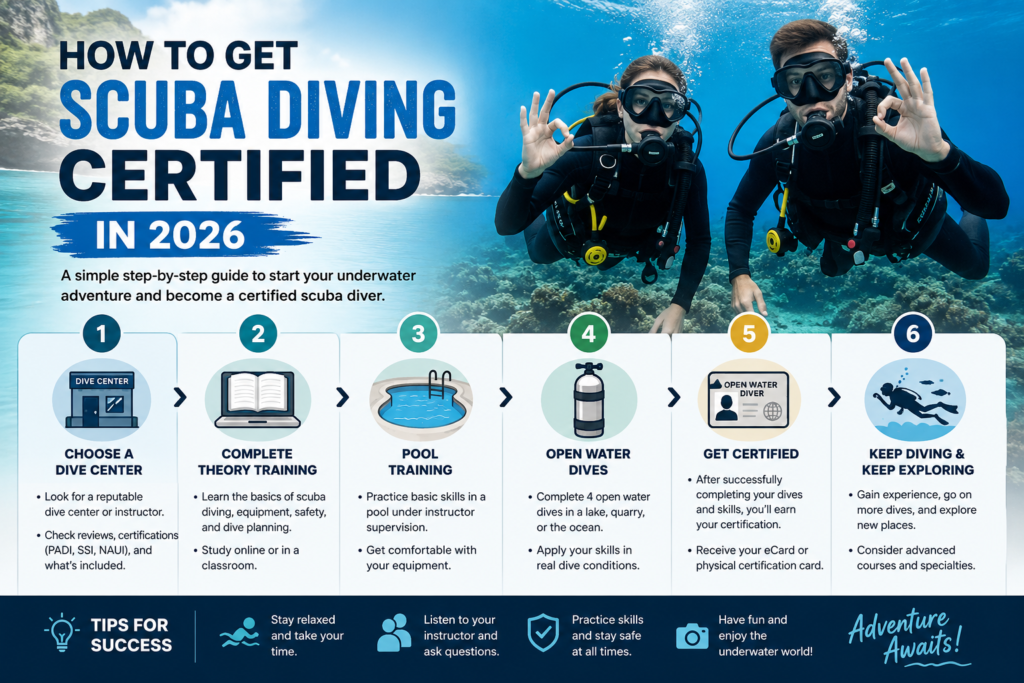
Step 1: Find a Good Dive Center
Step 2: Learn the Basics Before You Enter the Water
Step 3: Practice in the Pool
4: Your First Open Water Dives Step
5: Pass the Course and Get Certified
How Much Does It Cost?
The cost of getting scuba certified depends on where you take the course and which training agency you choose. In most countries, the price includes your theory lessons, pool training, open water dives, equipment rental, and certification fee. Some dive centers also offer discounts if you book online or during the off-season. Before paying, always ask what is included in the course so there are no unexpected costs later.
| Country/Region | Average Cost |
|---|---|
| 🇺🇸 United States | $400–$700 USD |
| 🇬🇧 United Kingdom | £300–£550 GBP |
| 🇫🇷 France | €350–€600 EUR |
| 🇩🇪 Germany | €350–€650 EUR |
| 🇮🇹 Italy | €300–€600 EUR |
| 🇪🇸 Spain | €300–€550 EUR |
| 🇳🇱 Netherlands | €350–€650 EUR |
| 🇦🇺 Australia | AUD 600–900 |
| 🇨🇦 Canada | CAD 500–800 |
| 🇦🇪 United Arab Emirates | AED 1,500–2,500 |
| 🇹🇭 Thailand | 8,000–15,000 THB |
| 🇮🇩 Indonesia (Bali) | 4.5–7.5 million IDR |
| 🇲🇻 Maldives | $500–$800 USD |
| 🌍 Global Average | $300–$700 USD |
What Equipment Will You Use?
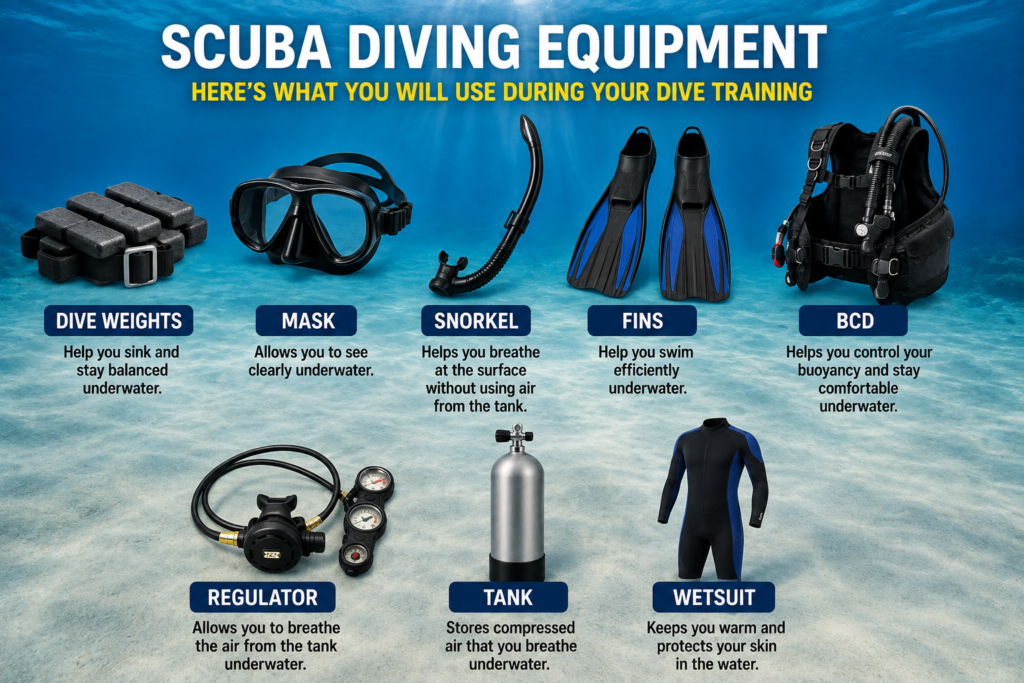
Most dive centers provide rental gear during training.
Equipment includes:
Dive weights
Mask
Snorkel
Fins
Buoyancy Control Device (BCD)
Regulator
Tank
Wetsuit
Most dive centers provide all the equipment during your certification course. You’ll use a mask, snorkel, fins, wetsuit, BCD, regulator, scuba tank, and weights. Many beginners later buy their own mask and fins for a better fit and more comfort.
Common Mistakes Beginners Make
Many beginners make small mistakes during their first scuba course, but they are easy to avoid. Some common ones include holding their breath underwater, forgetting to equalize their ears, using too much energy while swimming, and not checking their air supply regularly. The best way to avoid these mistakes is to stay calm, listen carefully to your instructor, and practice each skill slowly without rushing.
IN next article
Common Fears New Divers Have like as…
“I’m afraid of sharks.”
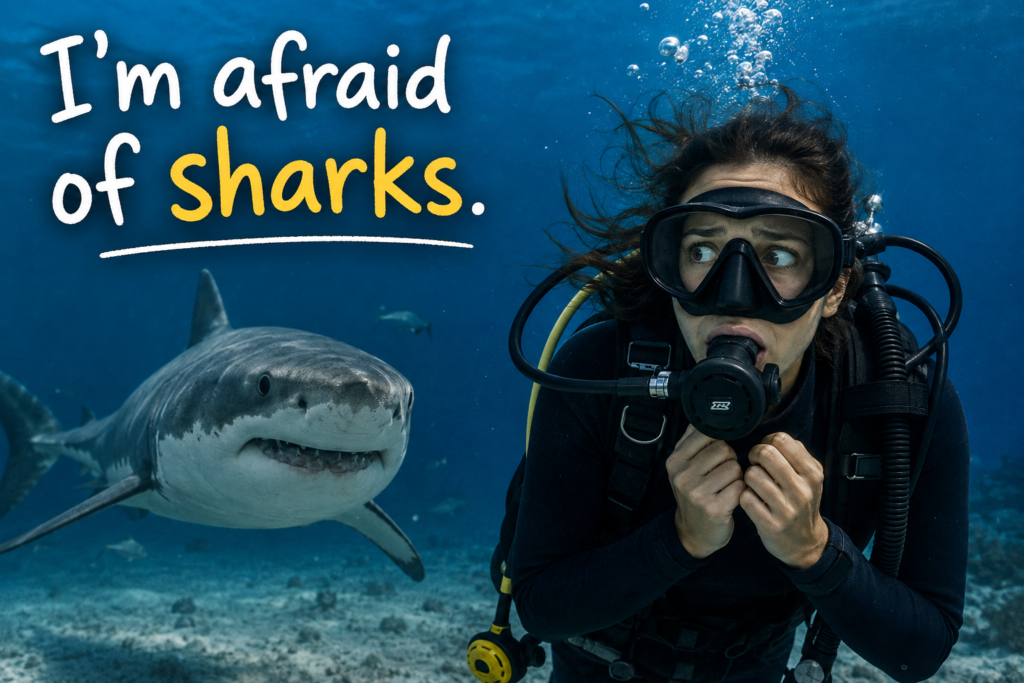
Shark encounters during ……………………………………………………………………humans.
“What if I run out of air?”
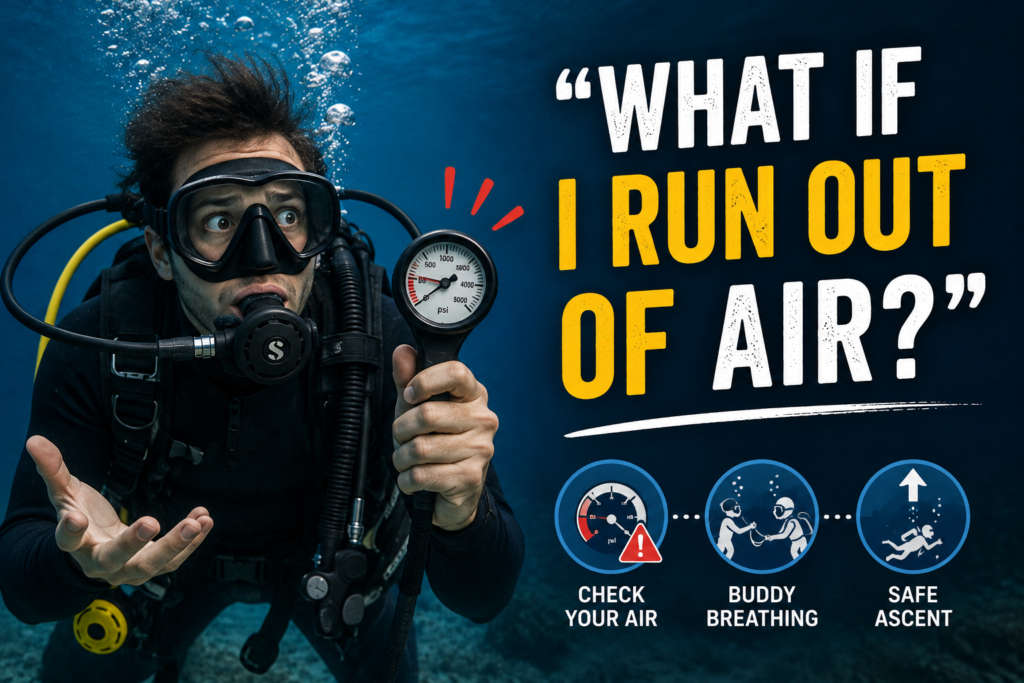
Will I panic underwater?”